Who Gets to Decide What Looks Classy?

A trend for bare-looking nails raises a bigger question: who gets to decide what counts as classy? Bourdieu helps us see how everyday judgements about taste can draw social boundaries, often without us noticing.
Unpack the layers of social inequality—class, race, gender, disability, and age. Examine how power and privilege shape opportunities, access, and life outcomes.
A trend for bare-looking nails raises a bigger question: who gets to decide what counts as classy? Bourdieu helps us see how everyday judgements about taste can draw social boundaries, often without us noticing.

The National Student Survey is usually read as a scoreboard for teaching quality. This article argues that the NSS is better understood sociologically: not just as a measure of student experience, but as an instrument that shapes institutional behaviour.

Job adverts demand communication, leadership, and resilience. But who actually gets credit for them? Drawing on Bourdieu, Puwar, and Rivera, this article argues that soft skills are not recognised neutrally — they are filtered through class, race, and cultural capital. The result is a hiring system that mistakes social advantage for individual merit.

Student recruitment dashboards promise a single version of the truth about who will enrol. This article shows how small choices about funnels, conversion and melt can create competing “truths”, quietly shape who gets attention, and reproduce inequality in HE – and suggests practical ways to use dashboards, AI and KPIs more reflexively.
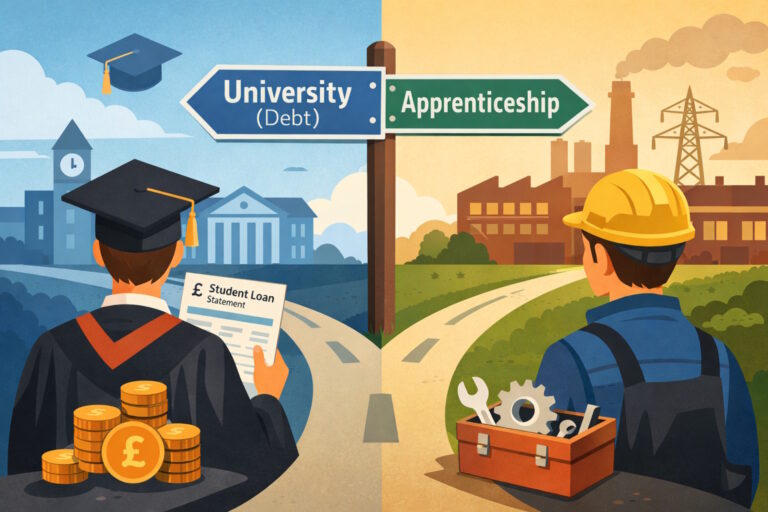
This article uses Johanna Noble’s recent column on Plan 2 student loans to ask who is really put off university by talk of a “graduate tax”. Drawing on research on first-in-family and working-class students, it shows how fear of debt, school guidance, and weak vocational routes combine to reproduce classed access to higher education.

League tables and Ofsted reports matter, but school and university choices are often decided on the grapevine. This piece shows how parent networks, WhatsApp chats and “hot” knowledge quietly reproduce advantage—and why first-in-family and working-class students are left with thinner information.