Recent Articles
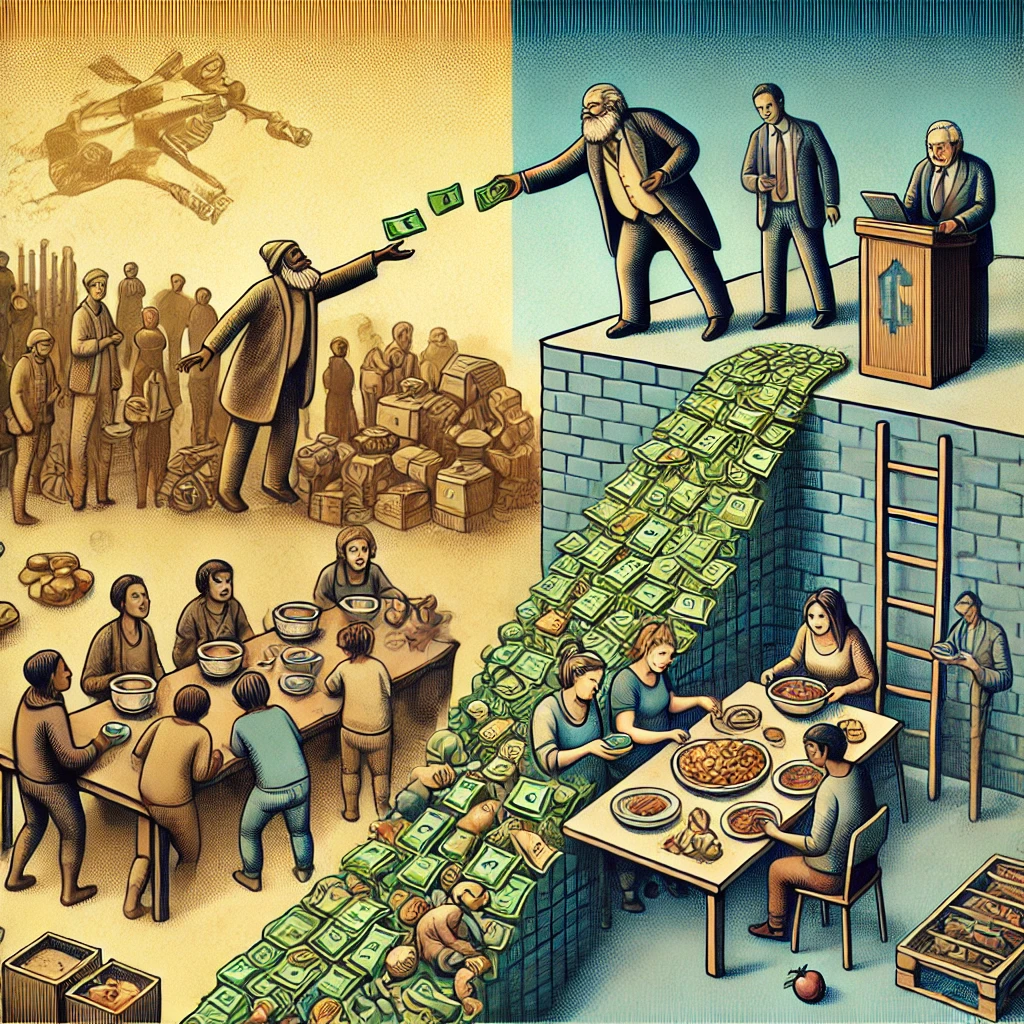
Charity, Mutual Aid, and the State: Who Should Tackle Inequality?
Is charity or mutual aid the best way to tackle social inequality? This article explores the sociological debate, examining government withdrawal, burnout in volunteer efforts, and international welfare comparisons.
Read more
Meritocracy or Myth? The Truth About the ‘Self-Made’ Narrative
Is the self-made success story a reality or a myth? This article explores the sociological debate around meritocracy, examining both the arguments for and against the self-made narrative, and the structural barriers that shape social…
Read more
Karl Marx: Misunderstood, Not a Bogeyman
Karl Marx is one of the most polarising thinkers in modern history. Depending on whom you ask, he is either a prophet of workers' liberation or the architect of totalitarian nightmares. The media often presents…
Read moreRecent ‘Explained’ Articles

Why Does Where You Live Affect Your Opportunities?
Where you live can shape access to education, work, housing, transport and public services. This article explores how place becomes part of social inequality and why opportunity is unevenly distributed across different areas.
Read more
What Makes Something Deviant?
What makes behaviour deviant, and who gets to decide? This article explores social norms, labelling, stigma, power and why definitions of deviance change across time, place and social groups.
Read more
Why Do People Obey Rules Nobody Actually Enforces?
Why do people follow unwritten rules even when nobody is watching? This article explores social norms, sanctions, socialisation, embarrassment, belonging and the everyday processes that keep social life orderly.
Read more
What Counts as a Family?
Families can take many forms, and what counts as a family has changed across time and place. This article explores family diversity, socialisation, gender, domestic labour and the social forces that shape family life.
Read more
What Do Sociologists Mean by Social Class?
Social class is about more than income. This article explores how Marx, Weber and Bourdieu help us understand class, life chances, cultural capital, social mobility and the unequal distribution of opportunity.
Read more
Where Do Our Ideas About ‘Normal’ Come From?
What feels normal is often something we have learned. This article explores how norms, values, socialisation and power shape our ideas about acceptable behaviour, and why ‘normal’ changes across time and place.
Read moreThinking Sociologically explores class, power, and everyday life through a critical lens — with practical tools for reading the social world.